A 50% markup sounds like you keep half. You do not. On a ₹100 cost, a 50% markup makes the selling price ₹150. The profit is ₹50. ₹50 out of ₹150 is a 33.3% margin, not 50%. Teams that mix the two words quietly give away profit — especially once a “small discount” lands on the invoice.
This article is educational math for pricing, not tax, legal, or investment advice. Run the same numbers in a markup calculator and a profit margin calculator before you treat a percentage as a policy.

Markup and margin in one sentence each
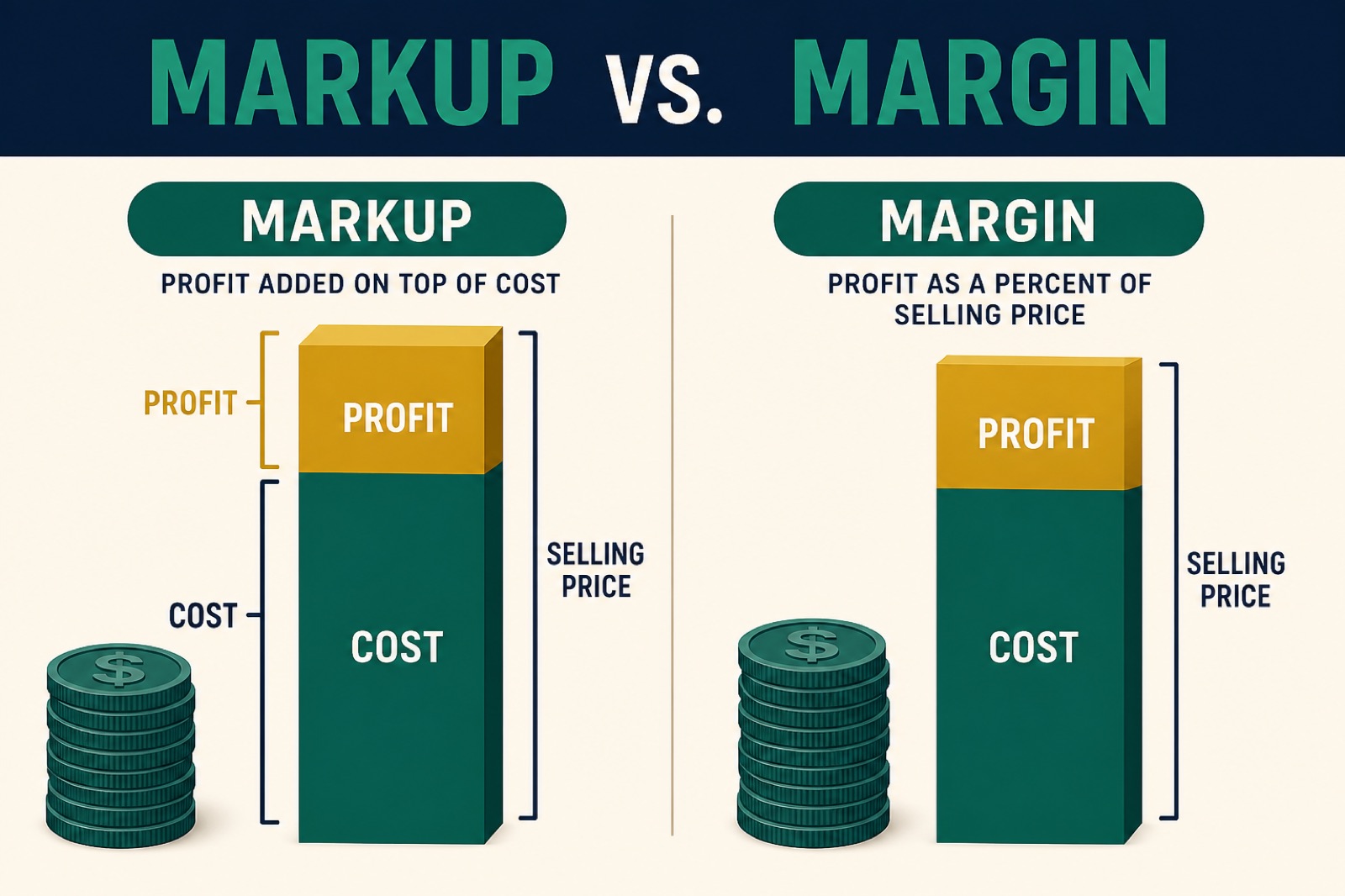
Markup answers: “How much did I add on top of cost?”
Margin answers: “How much of the selling price is profit?”
Same rupees of profit. Different denominator.
| Starting cost | Markup | Selling price | Profit | Margin |
|---|---|---|---|---|
| ₹100 | 25% | ₹125 | ₹25 | 20% |
| ₹100 | 50% | ₹150 | ₹50 | 33.3% |
| ₹100 | 100% | ₹200 | ₹100 | 50% |
The last row is the one people quote from memory: only a 100% markup produces a 50% margin. If your target is “keep half of the ticket,” you are talking margin, and the markup has to be 100%, not 50%.
The two conversion formulas
Use decimals (50% = 0.50).
- Margin = markup ÷ (1 + markup)
- Markup = margin ÷ (1 − margin)
Worked example: you want a 40% margin. Markup = 0.40 ÷ 0.60 = 0.667, or 66.7% on cost. If cost is ₹300, price = 300 × 1.667 = ₹500. Profit = ₹200, and 200 ÷ 500 = 40%.
Where the mix-up usually happens
- A discount is applied to the ticket, not to cost. A 20% off sale on a 33% margin item can wipe most of the profit. Check the new price in a discount calculator, then recompute margin.
- Vendor quotes markup; finance reports margin. Both can be “right” and still disagree in a meeting.
- Shipping, packaging, or marketplace fees sit outside “cost.” If they are real, put them in cost or the margin is theatre.
- Break-even volume is ignored. A healthy unit margin still fails if fixed costs need more units than you will sell. Pair the percentage with a break-even calculator.
A pricing habit that stays honest
- Write cost, target margin, then required markup — in that order.
- Convert once, then lock the selling price.
- When you offer a discount, recompute margin on the discounted price, not on the original sticker.
- Track rupee profit with a profit calculator so a pretty percentage cannot hide a tiny leftover.
If you sell in India and quote inclusive prices, separate the tax line from the margin line. A GST calculator helps you see exclusive vs inclusive amounts. It does not replace an accountant.
A 10-minute desk check
Take one SKU you already sell:
- Write the true landed cost (product + inbound freight + packaging you always spend).
- Write the actual selling price after the discount you usually give, not the MRP you wish customers paid.
- Compute markup and margin both.
- If margin is below the number you tell yourself in planning, the story was the markup number.
That gap is the whole article. The words sound interchangeable. The denominators are not.
Bottom line
Markup lives on cost. Margin lives on price. Convert before you advertise a percentage, and convert again after any discount. Utila’s business calculators run in the browser so you can test the arithmetic without uploading a spreadsheet of invoices.